The Real Cost of 'We've Always Done It This Way'

There's a phrase that kills more businesses than bad products or tough markets: "We've always done it this way."
It sounds harmless. Even responsible. It implies stability. Consistency. But in practice, it's the most expensive sentence in your business — because it hides costs that never show up on a balance sheet.
The Invoice That Costs $47
A small accounting firm we spoke with had a bookkeeper who processed client invoices manually. Pull the data from email. Enter it into the accounting software. Cross-check against the project tracker. Send the invoice. Log it in a spreadsheet.
Each invoice took about 25 minutes. They processed around 80 per month.
That's 33 hours per month. Just on invoices. For one person.
At their bookkeeper's fully loaded cost (salary plus benefits plus office space), that came out to roughly $47 per invoice in labor alone. For something that could be automated to take 2 minutes — most of it just a human glancing at the output and clicking "send."
When we showed them the math, the operations manager said, "But we've always done it this way."
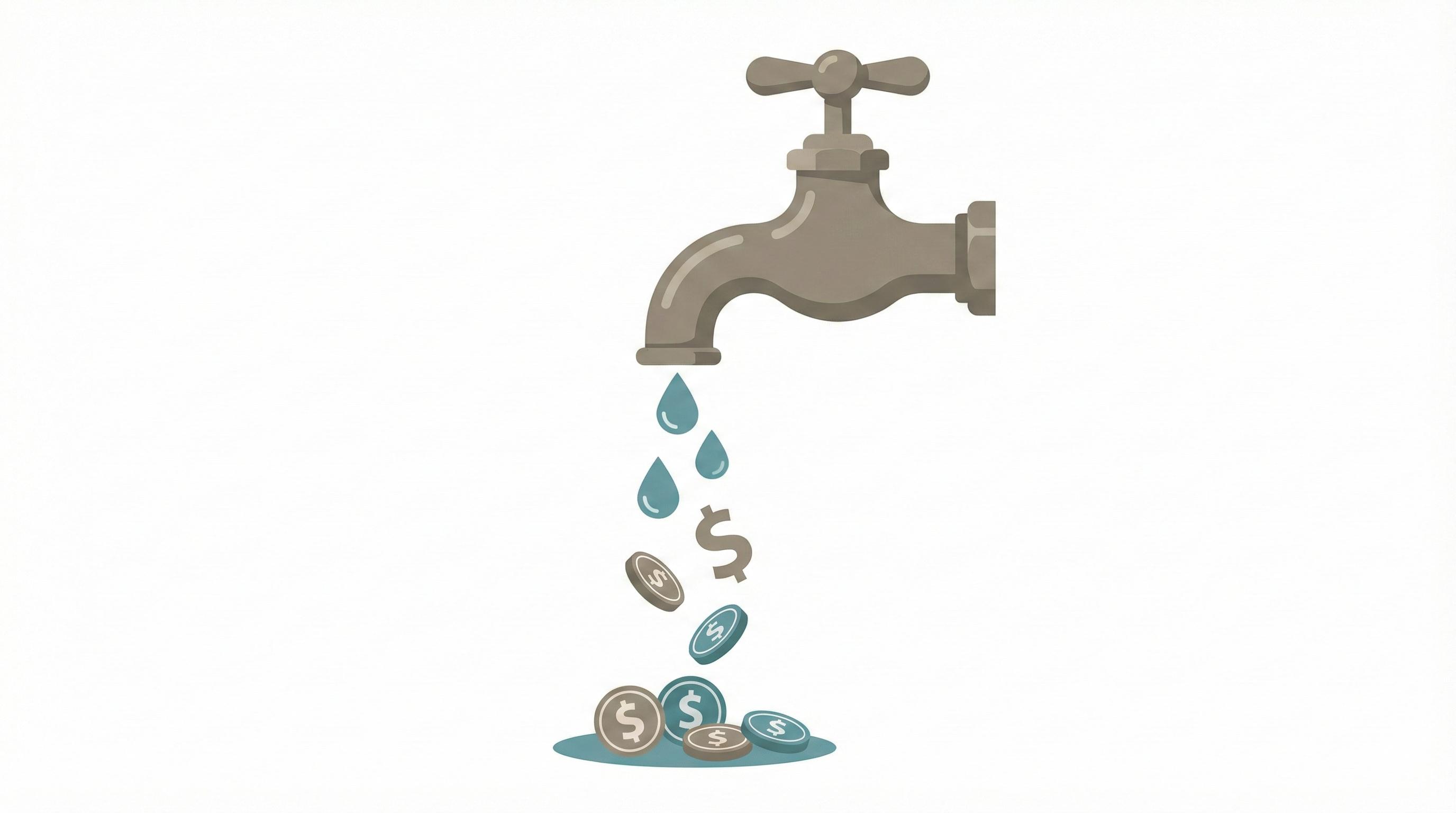
They weren't being stubborn. They just couldn't see it. When you live inside a process every day, the waste becomes invisible. It's like a dripping tap — you stop hearing it.
Where the Hidden Costs Live
In every small business we've audited, the biggest cost savings aren't in the obvious places. They're in the mundane, invisible work that nobody thinks about because it's "just how things are done."
Data re-entry. Your team enters the same client information into three different systems. Each one takes a few minutes. Multiply by every client, every week, for a year. You're looking at hundreds of hours.
Email follow-ups. Someone on your team manually sends reminder emails: appointment confirmations, payment follow-ups, onboarding sequences. These are templated, predictable, and identical every time — yet a human writes and sends each one.
Document searching. "Where's the contract for Client X?" This question gets asked multiple times a day in most professional services firms. Someone stops what they're doing, digs through folders or emails, finds the document, and sends it along. Five minutes here, ten minutes there.
Reporting. Your team spends Friday afternoon building a report from data scattered across three tools. They copy numbers, format a spreadsheet, write a summary. The same report, with the same structure, every single week.
None of these are big problems in isolation. But they compound. A business with 10 employees losing 5 hours per week each to this kind of work is losing 2,600 hours per year. At even a modest cost per hour, that's a full-time salary going to work that adds zero value.
The Hidden Cost You're Not Counting
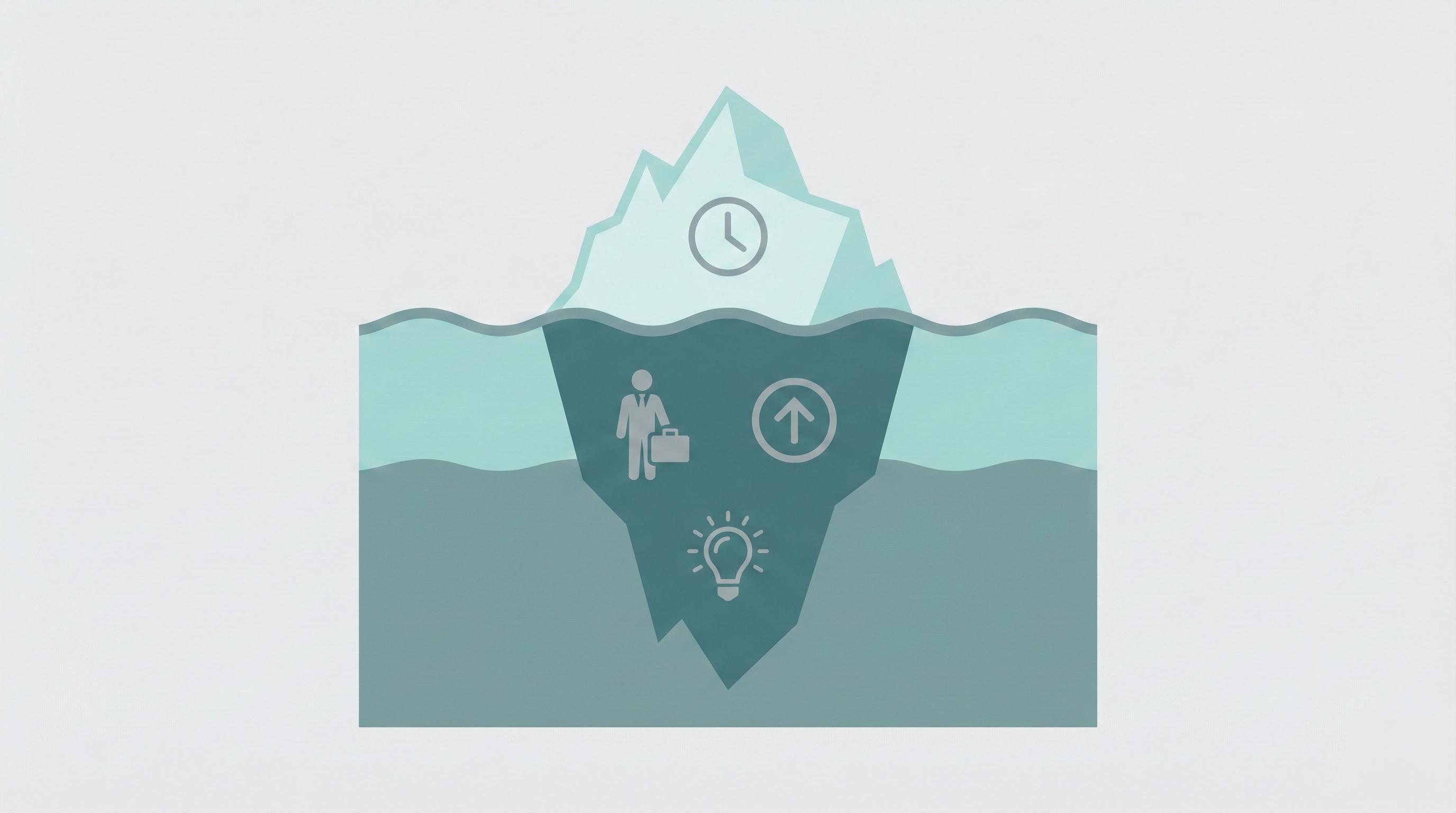
The labor cost is just the beginning. The real damage is what economists call opportunity cost — what your team would be doing if they weren't buried in busywork.
Your operations manager could be improving client retention instead of chasing missing documents. Your sales team could be following up with leads instead of entering data. Your bookkeeper could be doing financial analysis instead of processing invoices manually.
Every hour spent on automatable work is an hour not spent on work that actually grows the business. That's the cost that "we've always done it this way" really represents.
The Fix Is Usually Simpler Than You Think
Here's the part that surprises most business owners: fixing this doesn't require a massive technology overhaul. It doesn't require AI (usually). It doesn't require hiring a development team.
It requires someone to look at your business with fresh eyes, identify the 3-5 biggest time drains, and implement straightforward solutions: connecting tools that don't talk to each other, automating repetitive email sequences, setting up templates and workflows, or — in some cases — just redesigning a process so it takes fewer steps.
Most businesses we work with see 10+ hours saved in the first month. Not from revolutionary technology. From eliminating waste that had become invisible.
One Question to Ask Yourself Today
Walk through your office (or your Slack, or your email) and ask: "What does my team do this week that they'll do again next week, in exactly the same way, with exactly the same steps?"
Write down everything that comes to mind. Then put a rough hour estimate next to each one.
The total will surprise you. And that total is what "we've always done it this way" actually costs.
Why Most Small Businesses Don't Need AI (Yet)
Most small businesses don't have an AI problem — they have a systems problem. Here's how to know which one you actually have.
5 Signs Your Business Has Outgrown Manual Processes
Growing businesses don't fail because of bad products — they fail because their systems can't handle the scale. Here are the warning signs.