Scaling Complexity: How We Built the Rails for 1M+ Healthcare Transactions Across 3 Countries
Company
Talamus Health
Role
Chief Operating Officer
Duration
2018-2026
Location
Ghana, Nigeria, Zimbabwe
Key Results
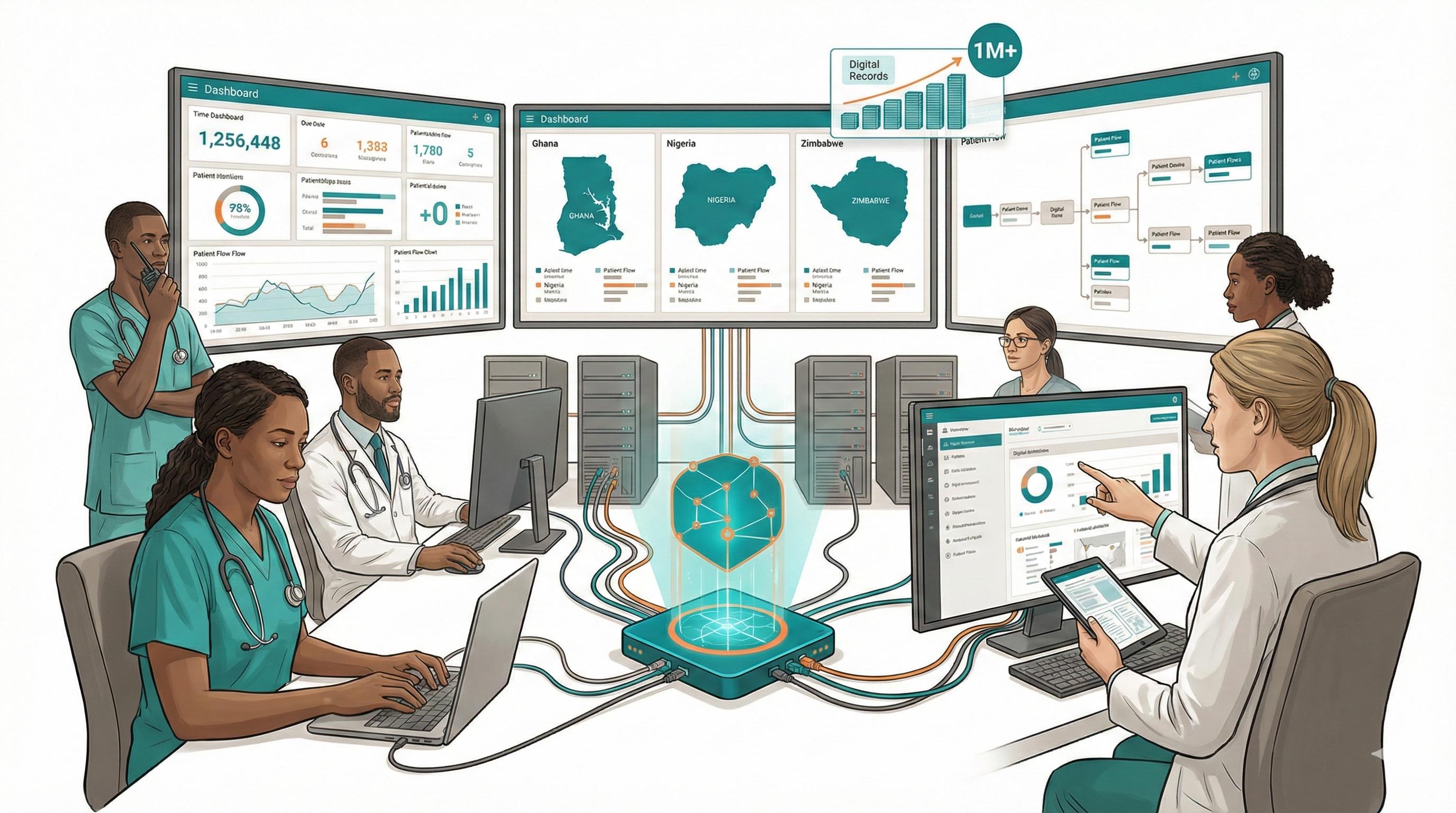
- Scaled to 3 countries serving 1M+ healthcare transactions
- 79% reduction in provider onboarding time (38 days → 8 days)
- 70% efficiency improvement in patient registration for Lagos State
- 100% uptime for clinical users despite infrastructure challenges
- 40% acceleration in development cycles
- Secured $1M+ in partnerships with Bill & Melinda Gates Foundation, Clinton Health Access Initiative, and Lagos State Government
- Winner: UN-ITU Telecom World Award for Most Scalable Solution
The Challenge: "Building the Plane While Flying It"
In 2018, I formally joined a healthcare technology startup with a product built for the wrong market and zero revenue. The ambition was massive: connect patients, providers, payers, and regulators across Africa's fragmented healthcare ecosystem.
But ambition hits a wall when it meets reality in emerging markets. We weren't just battling software bugs; we were battling fundamental infrastructure constraints.
The Three Gaps
The Trust Gap Governments and hospitals were deeply skeptical of digital transformation. They had seen too many failed technology projects. Why should they trust us?
The Infrastructure Gap Healthcare delivery doesn't stop when the internet goes down, but our cloud-first architecture did. In peri-urban Lagos, network outages were daily occurrences — and each outage meant clinics couldn't access patient records.
The Scale Gap We needed to digitize 100 Primary Healthcare Centres (PHCs) in Lagos State efficiently. The manual onboarding process was taking 38 days per facility. At that rate, scaling to hundreds of facilities was mathematically impossible.
The "Systems" Fix
We stopped treating this as a software problem and started treating it as an operations problem. I applied the framework I now use at 82Brands: Systems Thinking + First Principles.
This wasn't about writing better code. It was about re-engineering how the entire operation functioned.
Solution 1: Engineering the Operations (The "Local-First" Pivot)
The Problem
When our cloud-first architecture failed in peri-urban Lagos due to power cuts and network outages, we had to design for this contraint.
The Fix
We didn't just "throw money at the problem" We re-engineered the system for the constraint.
Local-First Data Synchronization: We redesigned the architecture so that each facility could function completely offline, with intelligent synchronization when connectivity returned. Clinical data was always available locally, regardless of internet status.
USSD Interfaces: We built lightweight USSD (SMS-like) interfaces for basic functions, ensuring that even the lowest-end feature phones could interact with the system.
The Result
100% uptime for clinical users, regardless of internet connectivity. When other health-tech platforms failed during network outages, Talamus kept running. This became our competitive moat.
Solution 2: Automating the Bureaucracy
The Problem
Scaling to 100+ facilities manually was operationally impossible. Each facility required:
- Stakeholder alignment meetings
- Staff training sessions
- Data migration
- Hardware setup
- Go-live support
At 38 days per facility, we needed 3+ years to onboard 100 facilities.
The Fix
We mapped the end-to-end user journey and identified every friction point. Then we built systems to eliminate the friction:
Self-Serve Onboarding Engine: We created a guided setup process that facilities could complete with minimal hand-holding. Documentation, training videos, and automated checklists replaced manual intervention.
Automated Deal Routing: Using n8n (workflow automation), we built conditional logic that routed onboarding tasks automatically based on facility type, location, and readiness. No more "who's handling this clinic?"
Parallel Processing: Instead of sequential onboarding (alignment → training → setup → go-live), we designed parallel workflows where possible. Training could happen while hardware was being shipped.
The Result
Provider onboarding time dropped from 38 days to 8 days — a 79% reduction in friction. We could now onboard 200 facilities in 4.4 years of work-time, but with parallel processing, we did it in 18 months.
Solution 3: The "Friction-to-Feature" Loop
The Problem
Healthcare software often fails because it solves problems engineers think exist, not problems users actually face. We were burning development cycles on features nobody used.
The Fix
We instituted a ritual: Every support ticket and operational friction point was directly translated into product requirements.
The Process:
- Weekly review of all support tickets categorized by frequency and severity
- Direct line from support team to product team — no information loss
- Operational friction ("It takes 20 minutes to find this report") became user stories
- New features weren't approved without evidence of user demand
This required breaking down silos between operations, support, and engineering — something most startups fail to do.
The Result
- 35% increase in feature adoption (we stopped building what nobody wanted)
- 40% acceleration in development cycles (we were solving real problems, not guessing)
- Product-market fit improved because we were listening to actual users
The Results: From Pilot to Pan-African Platform
By applying rigorous operational engineering to a chaotic market, we transformed a struggling pilot into a sustainable ecosystem:
Scale
- 3 countries: Ghana, Nigeria, Zimbabwe
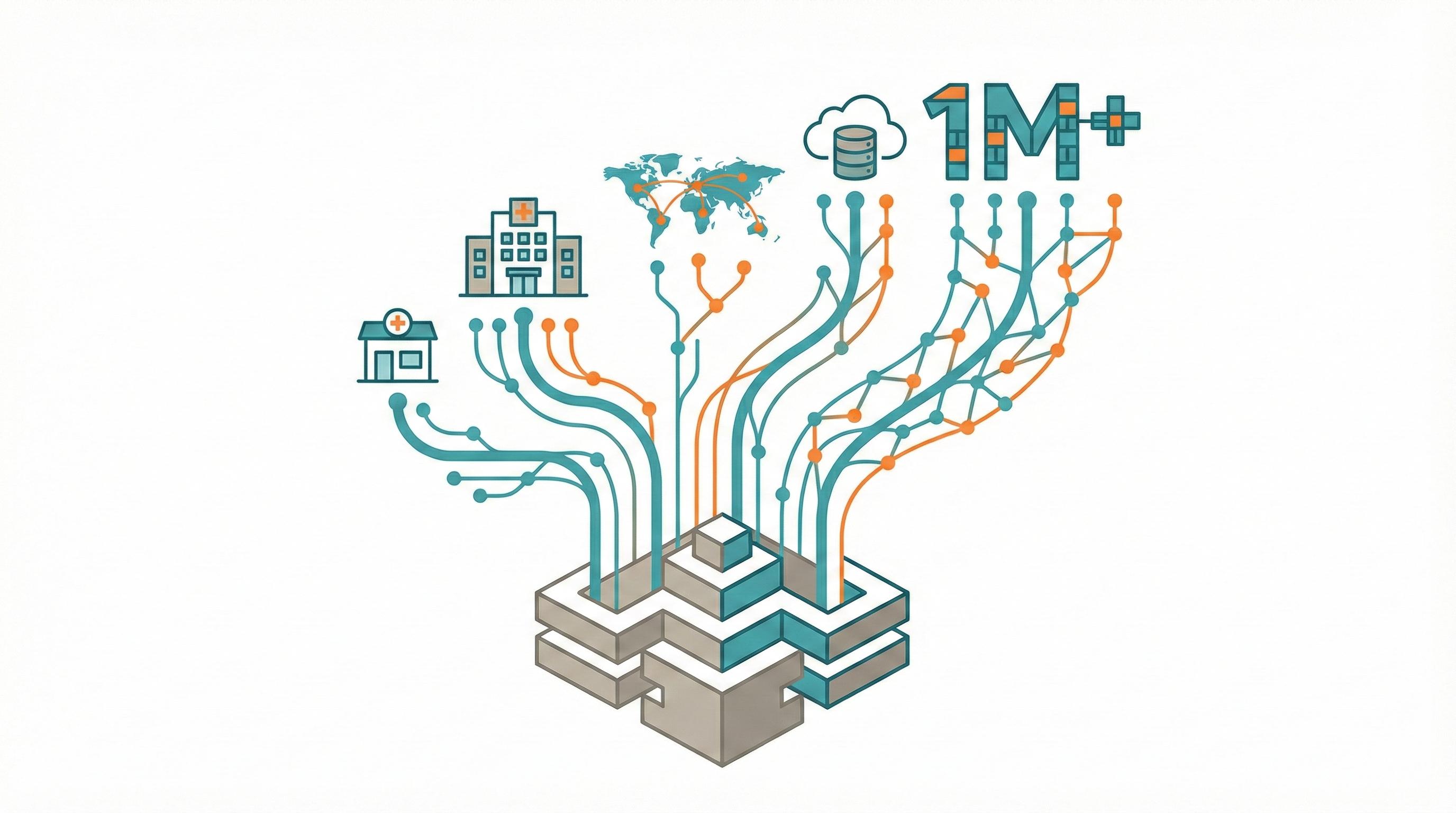
- 1M+ healthcare transactions processed through the platform
- 100+ Primary Healthcare Centres digitized in Lagos State alone
- Interoperable marketplace connecting patients, providers, payers, suppliers and regulators
Efficiency
- 70% efficiency improvement in patient registration for Lagos State
- 79% reduction in facility onboarding time
- 100% uptime for clinical operations despite infrastructure challenges
Recognition & Partnerships
- $1M+ in strategic partnerships with:
- Bill & Melinda Gates Foundation
- Clinton Health Access Initiative
- Lagos State Government
- UN-ITU Telecom World Award for Most Scalable Solution
- Recognized as a model for digital health transformation in Africa
Team Growth
- Grew from a 3-person founding team to 50+ employees across 3 countries
- Built operational playbooks that enabled rapid expansion
- Created a culture of "operational excellence meets technical innovation"
Why This Matters for Your Business
You might be thinking: "This is impressive, but I don't run a healthcare platform in Africa. How does this help me?"
Here's the connection:
The Constraints Were Different, But The Problems Were Universal
Infrastructure challenges? You have them too — just different ones. Maybe it's legacy software that won't integrate. Maybe it's a team that "doesn't have time" to learn new tools. Maybe it's processes that "have always been done this way."
Scale challenges? Every growing business faces onboarding bottlenecks. Whether it's 38 days to onboard a clinic or 3 weeks to onboard a new employee, the friction compounds as you grow.
Trust challenges? Whether it's government regulators or your own team skeptical of "another new system," trust is earned through operational reliability, not promises.
The Methodology Is Transferable
At Talamus, I learned that technology doesn't solve problems — systems do. The tech is just the tool. What matters is:
- Mapping the real constraints (not assuming you know them)
- Designing for the actual environment (not the ideal one)
- Automating the repetitive (so humans focus on what matters)
- Building feedback loops (so you stop guessing)
- Measuring what matters (not vanity metrics)
This is the exact methodology I apply at 82Brands.
The 82Brands Takeaway
I built Talamus by applying engineering principles to operations in one of the most challenging environments possible: African healthcare with unreliable infrastructure, skeptical stakeholders, and massive scale requirements.
If I can build a system that works for 100 government clinics with spotty internet in Lagos, then 82brands can definitely fix your agency's workflow. If I can onboard healthcare providers across 3 countries with different regulatory environments, we can definitely streamline your operations.
The problems you're facing aren't harder than the ones I solved at Talamus. They're just different.
And the good news? You don't have to figure it out alone.
About This Case Study
This is a real case study based on my work as Country Lead -> Product Manager -> Chief Operating Officer at Talamus Health from 2018 to 2026. This represents the flagship example of the 82Brands methodology applied at scale in a high-complexity environment.
Want to see how this methodology applies to your business? Let's talk.